

Embarking on the journey of Perfume Making Fragrance is a captivating experience. It blends art with science. This guide will introduce you to creating your own unique scent.
The Allure of Crafting Your Own Scent
Creating a personal fragrance is deeply rewarding. It allows you to express your personality. Your creation can be a signature scent. This process unlocks a world of aromatic possibilities.
You move beyond simply buying perfume. You become the creator. Imagine designing a scent no one else has. This is the magic of home perfumery.
Many people search for the best perfume for all occasions. Creating your own allows you to design exactly that. You control every ingredient.
The satisfaction is immense. You will learn a new and fascinating skill. Your creations can also make wonderful gifts.
Why Make Your Own Perfume?
Store bought perfumes can be expensive. Many contain synthetic ingredients. Making your own gives you control. You can choose natural and high quality components.
This ensures your fragrance is pure. You can avoid harsh chemicals. This is better for your skin. It is also better for the environment.
Personalization is a key benefit. You are not limited by commercial trends. You can design a scent that is truly yours. It will reflect your individual style perfectly.
Understanding the Basics of Perfumery
Before you begin, you must learn the fundamentals. Perfumery has its own language. Understanding terms like perfume notes is crucial.
A fragrance is a blend of different ingredients. These ingredients evaporate at different rates. This creates a complex and evolving scent.
This structure is called the fragrance pyramid. It is composed of top, middle, and base notes. Mastering this concept is key to Perfume Making Fragrance.
The Fragrance Pyramid: Perfume Notes Explained
The structure of any fragrance is built on perfume notes. These notes are distinct olfactory layers. They unfold over time.
Top Notes:
Top notes are your first impression. They are light and volatile. They evaporate quickly, usually within 15 minutes.
Common top notes include citrus scents. Think lemon, bergamot, and orange. Herbal scents like lavender and basil are also popular.
Middle Notes (Heart Notes):
After the top notes fade, middle notes emerge. They form the heart of the perfume. They last longer, for several hours.
Floral scents are common heart notes. Rose, jasmine, and ylang ylang are classic choices. Spices like cinnamon and clove add warmth.
Base Notes:
Base notes are the foundation. They are deep and heavy. They evaporate the slowest. They can linger for many hours.
Base notes give a fragrance its longevity. Common examples include sandalwood and cedarwood. Vanilla, amber, and musk are also used. A deep understanding of perfume notes is essential.
Essential Ingredients and Tools
To start your Perfume Making Fragrance journey, you need supplies. Gathering the right ingredients and tools is the first step. You will need aromatic oils and a carrier.
The Role of Essential Oils for Perfume
Essential oils for perfume are the soul of your creation. They are concentrated plant extracts. They provide the fragrance’s character.
There is a vast array of essential oils. Each has a unique aromatic profile. You can find them at health food stores. Many dedicated online suppliers exist too.
Start with a small collection. Choose oils from each note category. For example, lemon (top), lavender (middle), and sandalwood (base). This allows you to experiment with balanced blends.
Using high quality essential oils for perfume is important. The quality directly impacts your final product. Pure oils create a richer, more complex scent.
Carrier Oils and Alcohol
Your essential oils need a base. This base is called a carrier. It dilutes the essential oils. This makes them safe for skin application.
Two common carriers are alcohol and carrier oils. Perfumer’s alcohol is the traditional choice. It helps the fragrance project and last longer.
Carrier oils are another great option. Jojoba oil is a popular choice. It is odorless and absorbs well. Fractionated coconut oil is another alternative.
The choice of carrier affects the final scent. Alcohol creates a classic spray perfume. Oils create a more intimate, skin close fragrance.
Essential Tools for a Beginner
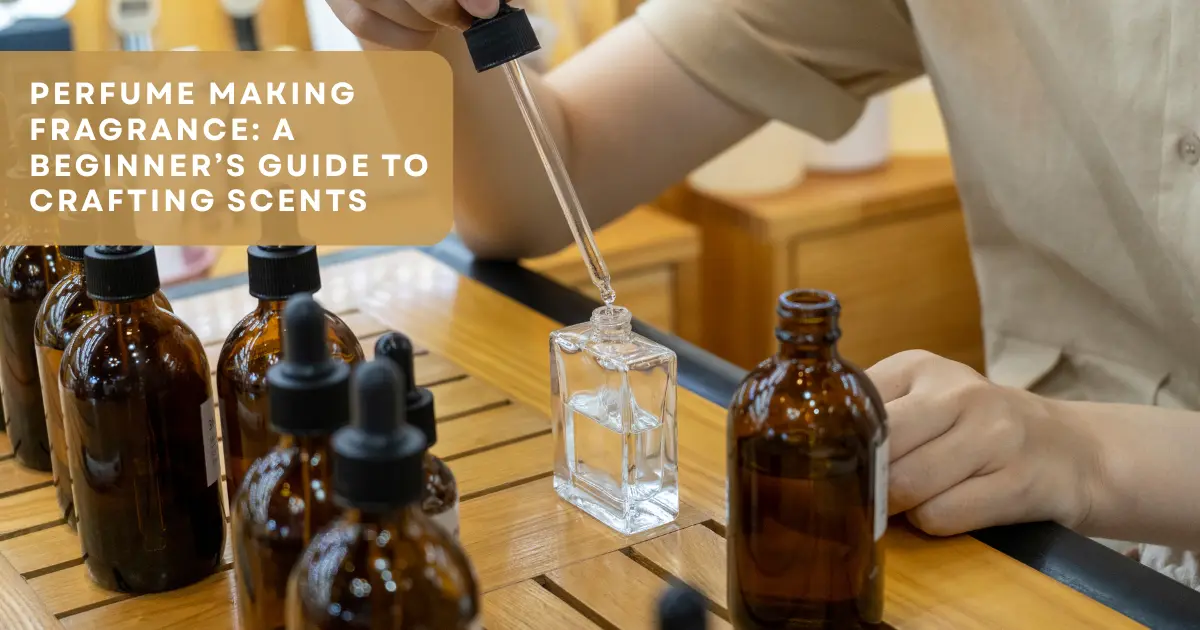
You do not need an expensive lab. A few basic tools will suffice. Precision and cleanliness are key.
You will need:
- Glass beakers or measuring cups.
- Droppers or pipettes for precision.
- Glass stirring rods.
- Dark glass bottles for storing your creation.
- A digital scale for accurate measurements.
- A notebook to record your formulas.
Always work in a well ventilated area. Protect your surfaces from spills.
Exploring Fragrance Families
Perfumes are categorized into fragrance families. Understanding these helps in blending. It guides your creative process. Each family has distinct characteristics.
The Chypre Family
The chypre meaning in perfumery is specific. It describes a particular fragrance structure. It is a warm, dry, and woody family.
A classic chypre fragrance has a specific accord. It typically starts with citrus top notes. Bergamot is a common choice.
The heart is often floral. Rose or jasmine are frequently used. The base is what defines it. It features oakmoss, patchouli, and labdanum.
Learning the chypre meaning opens up a sophisticated category. These scents are often elegant and rich. Many Best Luxury Perfumes for Her fall into this family.
Other Major Fragrance Families
Beyond chypre, other families exist. Each offers a different aromatic experience.
Floral: This is the largest family. It focuses on scents from flowers. From single florals to complex bouquets.
Oriental: These are warm and spicy. They feature notes like vanilla and incense. They are often opulent and sensual.
Woody: This family features aromatic woods. Sandalwood and cedarwood are prominent. Vetiver and patchouli are also included.
Fresh: This family includes citrus, green, and aquatic notes. These scents are clean and bright. They are often uplifting. Finding the best perfume for all occasions might lead you here.
Your First Perfume Making Fragrance Project
Now you are ready to begin. Start with a simple formula. This will help you understand the process. Don’t be afraid to experiment.
Step-by-Step Guide
- Define Your Concept: What kind of scent do you want? Is it for daily wear or a special event?
- Choose Your Notes: Select 3 to 4 essential oils for perfume. One for each note category (top, middle, base).
- Create Your Accord: Start by blending your base notes. Then add the middle notes. Finish with the top notes.
- Record Everything: Write down the exact number of drops for each oil. This is your formula.
- Dilute Your Blend: Add your essential oil blend to your carrier. A common ratio is 20% essential oil to 80% carrier.
- Age Your Perfume: Let your perfume mature for a few weeks. This allows the scents to meld together.
This process is a creative endeavor. Your first attempt might not be perfect. That is part of the learning curve in Perfume Making Fragrance.
A Simple Starter Formula
Here is a classic floral formula to try. It is a great starting point for beginners.
- 4 drops of Bergamot oil (top note)
- 10 drops of Rose oil (middle note)
- 6 drops of Sandalwood oil (base note)
Combine these oils in a small glass bottle. Then, add them to 10ml of your chosen carrier. Jojoba oil works wonderfully for this blend.
Shake the bottle gently. Store it in a cool, dark place. Let it age for at least two weeks. The longer it ages, the more cohesive the scent becomes.
Advancing Your Perfumery Skills
Once you master the basics, you can explore more. The world of Perfume Making Fragrance is vast. There are always new things to learn.
You can start studying more complex accords. Try recreating the structure of a chypre. The technical chypre meaning can be challenging. But it is a rewarding skill.
Experiment with more unusual essential oils for perfume. Explore materials like resins and absolutes. These can add incredible depth to your creations.
Consider investing in a perfumery kit. Many are available from a best online fragrance store. These kits often include a curated selection of materials.
Finding Inspiration
Inspiration is everywhere. It can come from a memory. It might be a place you visited. It could be inspired by your favorite foods.
Study commercial perfumes as well. Analyze the perfume notes of the Best Luxury Perfumes for Her. This can teach you about successful combinations.
Reading books on perfumery can also help. Joining online forums connects you with other enthusiasts. This community can be a great source of knowledge.
Looking for the best online fragrance store can also be inspiring. Browsing their selection can introduce new ingredients. It can spark new creative ideas for your blends.
Finding Quality Ingredients
The quality of your ingredients is paramount. It determines the success of your perfume. Sourcing high quality materials is a key skill.
Many suppliers specialize in perfumery ingredients. Searching for the best online fragrance store is a good start. Look for retailers with good reviews.
They should provide information on their sourcing. Look for details on purity and origin. This transparency is a sign of a reputable seller.
When you find a reliable best online fragrance store, you build a relationship. This can give you access to better materials. It also provides a resource for questions. Many creators find their best perfume for all occasions starts with great ingredients.
Creating a Signature Scent
The ultimate goal for many is a signature scent. This is a fragrance that is uniquely you. It is a perfume that people associate with you.
This takes time and experimentation. It requires you to know your own preferences. What smells do you truly love?
Think about your lifestyle. Do you need a light scent for the office? Or a bold one for evenings out? Maybe you want the best perfume for all occasions.
Your signature scent should feel like a second skin. It should be comfortable and confidence boosting. It is the culmination of your Perfume Making Fragrance journey. The Best Luxury Perfumes for Her often evoke a strong sense of identity, a goal for your own creation.
The Journey of Discovery
The process of creating a signature scent is personal. Document your experiments in a journal. Note which combinations you love.
Note which ones you do not. Over time, patterns will emerge. You will discover your personal olfactory style.
Don’t be afraid to break the rules. Some of the most iconic perfumes came from unconventional blends. Your unique perspective is your greatest asset.
Remember the chypre meaning and other family structures. Use them as guidelines, not rigid laws. Your creativity is what will make your fragrance special. This personal touch is what separates homemade creations from even the Best Luxury Perfumes for Her.
Conclusion
The art of Perfume Making Fragrance is an accessible craft. It is a journey of sensory exploration. It empowers you to create something truly personal.
By understanding perfume notes and fragrance families, you can begin. With quality essential oils for perfume and simple tools, you are set. Your first creation is just a few drops away.
This guide provides a solid foundation. Continue to learn and experiment. Whether you want the best perfume for all occasions or a unique artistic expression, the power is in your hands. You may even find your creations rival the Best Luxury Perfumes for Her. The world of scent awaits you.