


The world of men’s fragrances is both intricate and fascinating, with each scent telling a unique story. When you glance at a bottle of cologne or a perfume ad, terms like “woody,” “musky,” or “floral” often appear. But what do these terms mean? And why do certain notes stand out in popular men’s fragrances?
This guide breaks down common fragrance notes for men, helping you understand what’s inside that bottle and how it contributes to the signature scent you wear. From oud and musk to sandalwood oil and floral aromas, these elements form the backbone of the most famous men’s perfumes.
What Are Fragrance Notes?
To begin, let’s examine the basics of fragrance notes and their meanings. A fragrance, whether it’s a cologne or perfume, is composed of different layers, often categorized into three types of notes:
- Top Notes – These are the opening scents you smell immediately after application. They create the first impression but fade quickly.
- Heart (Middle) Notes – The heart is the core of the fragrance. It emerges after the top notes dissipate and lasts longer on your skin. These notes are often well-rounded and full-bodied.
- Base Notes – The final and longest-lasting layer. Base notes combine with the middle notes to form the fragrance’s lasting impression.
The harmony of these layers defines the scent’s character and appeal.

Popular Fragrance Notes for Men
If you’ve wondered why some colognes feel refined, earthy, or luxurious, the answer lies in their common fragrance notes. Here’s a closer look at the most popular ones and why they matter in men’s fragrance explained:
1. Oud
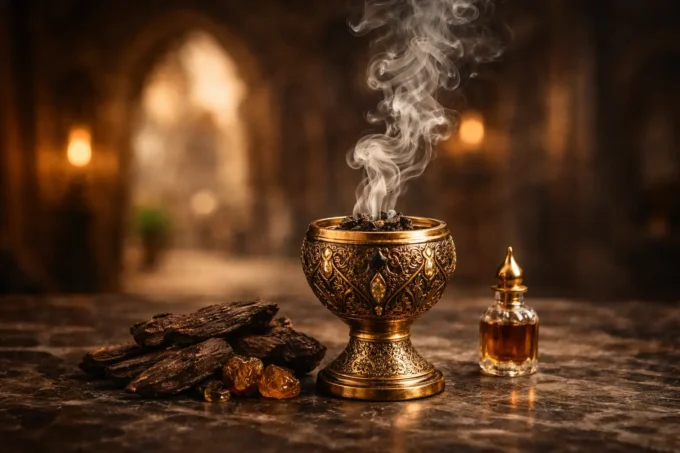
Oud, often called “liquid gold,” is one of the rarest and most luxurious fragrance notes. It’s derived from the heartwood of the agarwood tree, typically found in the Middle East and Asia. Oud is rich, smoky, and slightly sweet, exuding an air of sophistication. Many high-end, famous men’s perfumes feature oud for its distinctiveness.
- Cultural Appeal – Oud carries deep cultural ties, especially in Middle Eastern fragrance traditions, where it symbolizes luxury and opulence.
2. Musk
Another heavyweight in the most common men’s fragrances, musk is revered for its warm, slightly animalistic scent. It was originally sourced from musk deer, but modern fragrances now use synthetic musk for ethical reasons. Musk adds depth, sensuality, and staying power to perfumes.
- Sensory Profile – Musk is a staple in famous men’s perfumes, acting as the anchor for other notes with its earthy, enveloping scent.
3. Bakhoor
Bakhoor represents a distinctive Arab tradition. It refers to wood chips soaked in oils, often including oud and floral scents. When burned, bakhoor releases a rich and intoxicating aroma, frequently used in ceremonial or special occasions. Incorporating this note into fragrances lends warmth and richness.
- Benefits of Bakhoor – Beyond adding a touch of Middle Eastern allure, bakhoor-based scents are known to be comforting and relaxing.
4. Attar
Attars are natural perfumes distilled from botanical ingredients such as flowers, herbs, and spices. Popular in Asian and Arabic cultures, attars are alcohol-free, making them a common choice for those who prefer oil-based scents. They vary greatly in profile, ranging from sweet floral blends to darker, resinous tones.
- Types of Attar – Examples include sandalwood-based attars for woody undertones and rose attars for a floral emphasis.
5. Sandalwood Oil
A classic in the most famous men’s perfumes, sandalwood oil is creamy, woody, and slightly sweet. It has been used for centuries in perfumery as both a base note and a soul-soothing element.
- Why It’s Popular – Sandalwood oil blends beautifully with both masculine and unisex fragrances. Its calming nature makes it a favorite among timeless colognes.
6. Floral Scents
While floral notes are often associated with women’s fragrances, they play a crucial role in men’s fragrance explained. Popular floral notes for men include lavender, jasmine, and geranium. These lend balance and add complexity to the overall scent composition.
- Modern Trends – Many of the most common men’s fragrances now include floral notes for a softer, more approachable aroma.
The Cultural and Sensory Significance of Fragrance Notes
Fragrances are more than just scents—they’re powerful cultural and personal statements. For instance, oud and bakhoor carry the essence of Middle Eastern tradition, while floral scents and sandalwood resonate with both Eastern and Western cultures. Whether you’re wearing an urban-modern cologne or a time-honored attar, these notes connect us to a sensory legacy.
Additionally, the way fragrance notes interact with your skin makes every scent unique to you. This is why two individuals wearing the same cologne might detect slight differences.
Tips for Choosing the Right Fragrance
With so many common fragrance notes for men to explore, how do you pick the perfect one? Here are a few tips:
- Understand Your Preferences – If you love warm, woody scents, look for options with sandalwood or musk as base notes. If you prefer fresh, airy fragrances, consider floral or citrus-infused blends.
- Consider the Occasion – For formal events, oud-based or musk-heavy perfumes create a lasting impression. For casual or day-to-day use, opt for something lighter, like a sandalwood oil-based cologne.
- Test Before You Buy – Always test the fragrance on your skin to determine how it evolves with your body chemistry.
- Seasonal Choices – Use heavier fragrances (oud, musk) in cooler months and lighter notes (floral, citrus) in warmer weather.
Final Thoughts
Fragrances are a personal statement of style, mood, and tradition. By understanding the fragrance notes meaning and exploring the most common men’s fragrances, you can curate a scent wardrobe that complements every aspect of your life. With iconic notes like oud, musk, and floral scents, many of the most famous men’s perfumes not only captivate but also leave a lasting impression.
Take your time exploring and choosing a fragrance that resonates with your personality—because once you find the right scent, it becomes your signature.